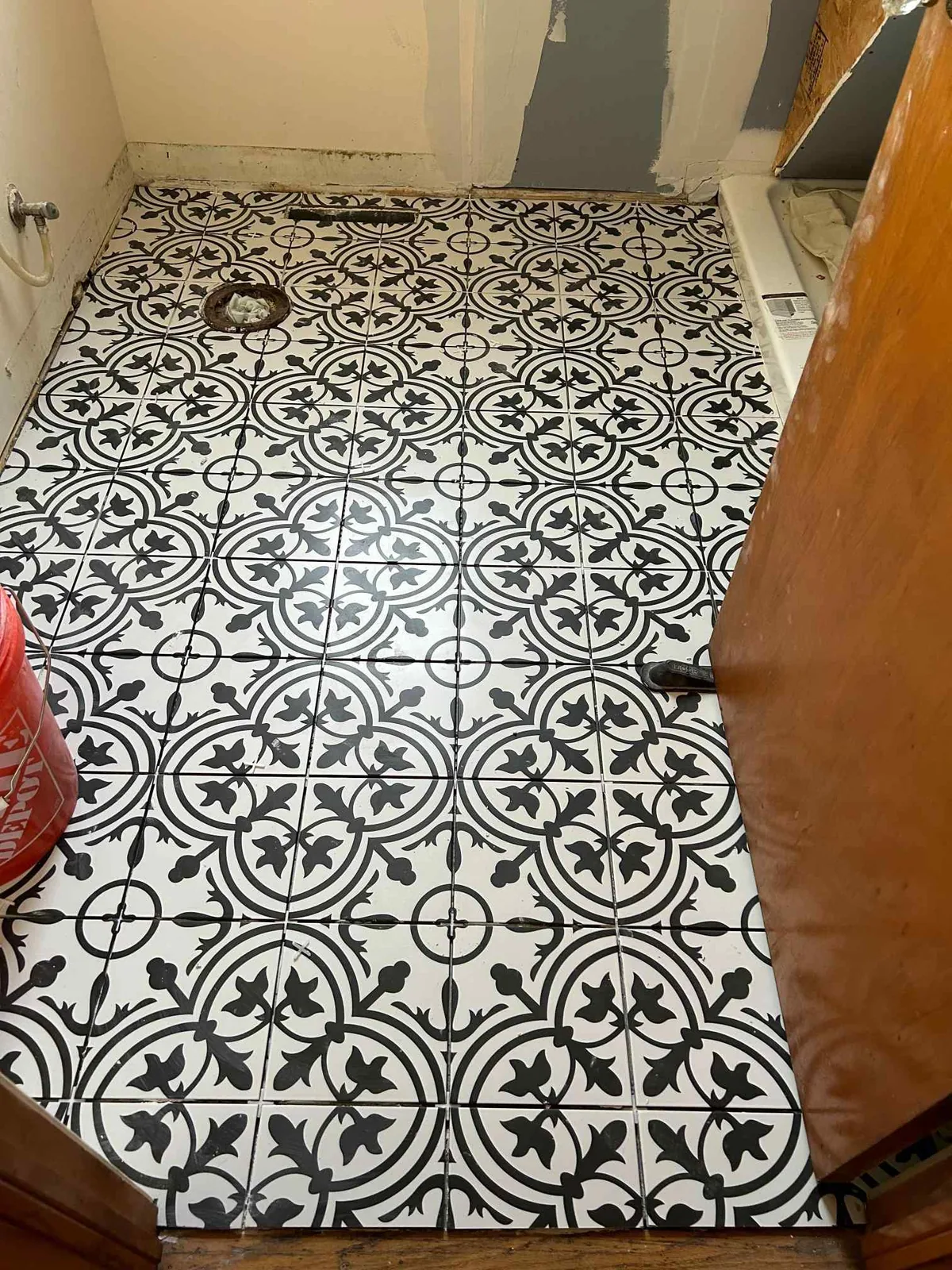
Tile flooring in Chicago has to handle everything from salted winter boots to summer humidity, and it still has to look good doing it. Tile flooring is one of the smartest investments you can make in your home or business - combining lasting durability with timeless style. At TileMasters, we handle everything from precise subfloor preparation to flawless final grouting, ensuring a floor that looks stunning and performs for decades.
Whether you’re updating a single room or reflooring an entire property, our expert installers deliver clean lines, level surfaces, and a finish you’ll be proud of.
From classic porcelain to statement patterns, we work with the full range of flooring tile to match your space and style.
Dense, hard-wearing, and milled to tight tolerances, porcelain is the top choice for kitchens, entryways, and any room that sees heavy daily traffic.
A versatile, budget-friendly option available in nearly unlimited colors, finishes, and sizes - a smart fit for lower-traffic rooms and accent areas.
Marble, travertine, slate, and granite bring one-of-a-kind veining and texture you can’t replicate - a genuine premium upgrade.
Oversized tile panels minimize grout lines for a seamless, modern look that’s also noticeably easier to keep clean.
Small-format tile sheets add texture, pattern, and detail - ideal for accents, borders, and statement floors that stand out.
Bold decorative tile turns an ordinary floor into a striking centerpiece full of color and personality.
There’s a reason tile remains the go-to flooring for homeowners and businesses alike.
Resists scratches, dents, and heavy foot traffic for decades of dependable performance.
A simple sweep and mop keeps tile looking pristine - no refinishing required.
Countless colors, textures, and patterns complement any design - from classic to modern.
Quality tile flooring is a sought-after upgrade that raises the value and appeal of your property.
A clear, proven 5-step process from first measurement to final walkthrough.
We start with an in person visit to measure the space, check the condition of your subfloor, and talk through how the room actually gets used day to day. That tells us which tile makes sense, whether porcelain, ceramic, or natural stone, and where the layout should start so cuts land in the least visible spots. You will get a written, itemized estimate before you commit to anything, with no pressure and no vague allowances that balloon later.
If there is existing flooring, our crew removes and hauls it away, then gets down to the surface underneath. We check the subfloor for flex, high spots, moisture, and damaged board, because tile is unforgiving and any movement underneath will eventually show up as a cracked tile or a failed grout line. We level, patch, and reinforce as needed, and in most Chicago homes we install a proper underlayment or uncoupling membrane before a single tile goes down.
Before anything is set permanently, we dry lay your tile to plan the pattern and confirm it looks right from the doorway, which is where people actually see the floor from. We balance the cut pieces so you do not end up with a full tile on one wall and a two inch sliver on the other. Each piece is then wet cut to fit around door jambs, vents, cabinet toe kicks, and transitions to other flooring.
Our installers set each tile in a full bed of thinset, back buttering larger formats so there are no hollow spots underneath. We check level constantly across the field and use leveling clips where the tile calls for it, so you do not end up with lippage you can feel with a bare foot. We work in sections, keep the site clean, and protect the rest of your home while the floor cures.
Once the tile has properly set, we grout the floor, clean the haze off thoroughly, and apply sealer where the material calls for it. We install transition strips, reset any trim we removed, and do a final clean of the space. Then we walk the finished floor with you together, in good light, so you can look at the grout lines and edges up close and ask anything before we call it done.
Common questions from Chicago homeowners before starting a tile flooring project.
Most single rooms take two to four days, depending on square footage, tile size, and whether old flooring has to come out first. Larger open floor plans or intricate patterns like herringbone can run five to seven days. We give you a specific timeline during your free estimate and tell you upfront which days you will not be able to walk on the floor.
Sometimes, yes. If the existing surface is flat, solid, well bonded, and the added height will not create problems at doorways or appliances, tiling over it can save time and money. We inspect the subfloor first and will tell you honestly if removal is the better call, because tiling over a surface that is already failing just buys you a couple of years.
Porcelain is denser and absorbs almost no water, which makes it the better choice for entryways, kitchens, bathrooms, and anywhere in a Chicago home that sees snow and salt. Ceramic is easier on the budget and works well in lower traffic rooms such as a powder room or a guest bath. We will walk you through both with your actual room and budget in mind.
Yes. We install electric radiant heating mats under tile, and it is one of the most requested upgrades we do, for obvious reasons in this climate. It is far easier and cheaper to add during a flooring install than to retrofit later, so it is worth deciding before we start. Ask about it during your consultation and we will price it as a separate line item.
Cost depends on the tile you choose, the square footage, the condition of the subfloor, and whether old flooring needs removal. Subfloor prep is the variable that surprises people most, since a floor that needs leveling or reinforcement adds real labor. We provide a detailed, itemized free estimate so you can see exactly where the money goes before committing.
A look at recent tile flooring installations across Chicago and the suburbs.
Get a free, no-obligation estimate for your tile flooring project today. Serving Chicago and the surrounding suburbs.
